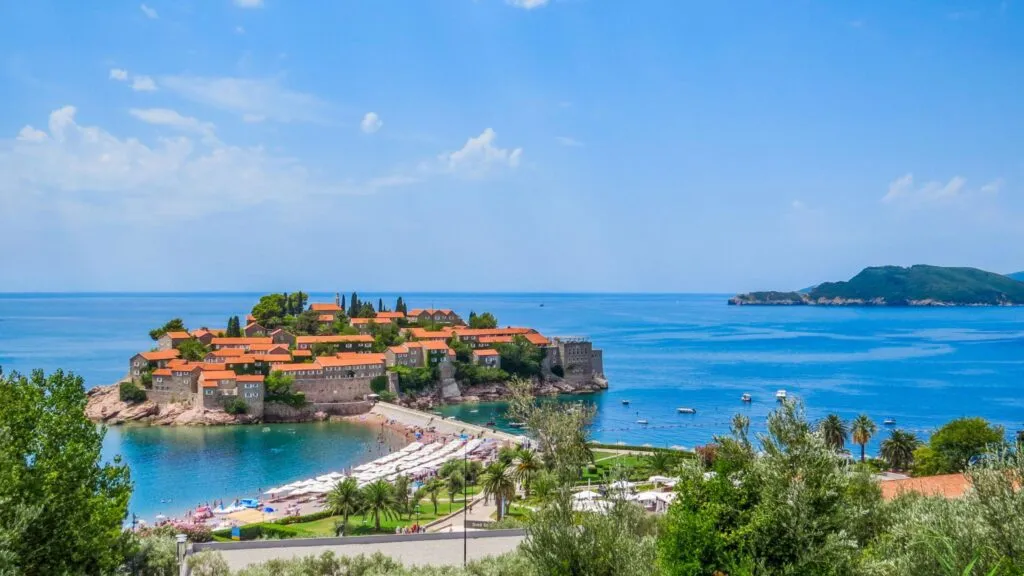
Sveti Stefan is expected to reopen for the 2026 summer season. Aman states that the resort will reopen this summer, with the exact date still to be announced, while the Government of Montenegro recently described the settlement process as the final step toward reopening the Sveti Stefan town-hotel complex and Villa Miločer.
This makes the story bigger than a simple hotel reopening. Sveti Stefan is not just another property on the coast. It is one of the strongest visual symbols of Montenegro tourism and a place that has long carried premium destination value for the country. When a landmark of that scale returns, it affects not only one business, but also the wider perception of Montenegro as a high-value Adriatic destination.
What gives Sveti Stefan such importance is its role in destination image. In tourism, some places function as accommodation, while others become part of how a country is remembered. Sveti Stefan belongs to that second category. Its architecture, location, and long-standing international visibility have made it one of Montenegro’s most recognizable tourism assets. That is why its reopening matters well beyond the luxury segment alone.

For Montenegro, this is relevant on several levels. First, it strengthens the country’s premium tourism profile. Second, it supports the image of the coast as a destination that can compete in the upper end of the regional market. Third, it brings attention back to a location that has always had strong symbolic value in travel, hospitality, and destination branding. In practical terms, that helps the wider tourism sector too, because high-profile places often influence how the entire destination is perceived.
It is also important that the reopening is tied not only to the island itself, but to the broader Aman Sveti Stefan complex, including Villa Miločer. That adds weight to the development because it reconnects the property, the brand, and the wider destination story in one larger tourism moment.

For the MICE and premium travel market, this kind of reopening matters because iconic destinations create confidence. They signal relevance, visibility, and long-term value. Even when travelers or partners are not booking that exact property, they still respond to what it represents. In that sense, the return of Sveti Stefan is also the return of one of Montenegro’s strongest destination messages: exclusivity, coastal beauty, and international recognition. This last point is an inference based on the property’s positioning and public significance.
If the reopening proceeds as expected, the 2026 season will mark the return of one of the country’s most important tourism symbols. For Montenegro, that is not only positive news for hospitality. It is a meaningful moment for destination positioning, visibility, and the long-term strength of the national tourism image.